
Various Types of Diodes: A Comprehensive Classification

Image of 1N4148 Diode Model
Introduction:
Hi, friends! I am Emory. From now on I will post something rewarding about electronic components here. Today this post is about Types of Diodes.
Diodes are fundamental electronic components that play a vital role in modern technology. They are semiconductor devices that allow electric current to flow in one direction while blocking it in the opposite direction. Diodes come in various types, each designed for specific applications. In this article, we will explore the different classifications of diodes, shedding light on their unique characteristics and applications.
Classification Based on Function:
1.1. Rectifier Diodes:
Rectifier diodes are used to convert alternating current (AC) into direct current (DC). They allow the current to flow in one direction during the positive half-cycle of the AC waveform and block it during the negative half-cycle. Common rectifier diodes include the standard silicon diode (1N400x series) and Schottky diodes.

Rectifier Diodes
*Example models of Rectifier Diodes:
1N4001: A common silicon rectifier diode capable of handling currents up to 1A.
1N5408: A higher voltage rectifier diode with a maximum repetitive peak reverse voltage of 1000V.
1.2. Zener Diodes:
Zener diodes are designed to operate in the reverse breakdown region, where they maintain a constant voltage across their terminals. They are primarily used for voltage regulation and protection against voltage spikes. Zener diodes are commonly employed in voltage reference circuits, voltage clamping, and surge protection applications.

Zener Diodes
*Example models of Zener Diodes:
1N4733A: A popular 5.1V Zener diode used for voltage regulation applications.
BZX55C5V1: A 5.1V Zener diode with a low power dissipation suitable for low voltage applications.
1.3. Light-Emitting Diodes (LEDs):
LEDs are semiconductor devices that emit light when an electric current passes through them. They are widely used in lighting applications, displays, and indicators. LEDs offer advantages such as high energy efficiency, long lifespan, and fast switching capabilities. Different types of LEDs include standard LEDs, high-power LEDs, and RGB LEDs.
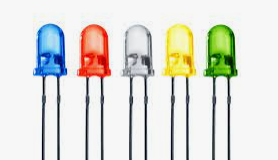
Light-Emitting Diodes (LEDs)
*Example models of Light-Emitting Diodes (LEDs):
5mm Red LED: A standard red LED used in various lighting and indicator applications.
Cree XLamp XP-L: A high-power LED capable of delivering high brightness for applications requiring intense illumination.
Classification Based on Material:
2.1. Silicon Diodes:
Silicon diodes are the most common type of diodes due to their availability and cost-effectiveness. They have a forward voltage drop of around 0.7 volts and are suitable for general-purpose applications such as rectification and signal detection.
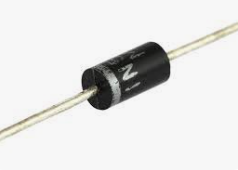
Silicon Diodes
*Example models of Silicon Diodes:
1N4148: A general-purpose silicon diode with fast switching speeds and a maximum forward voltage of 1V.
1N5819: A Schottky diode with a low forward voltage drop of approximately 0.45V, ideal for high-frequency applications.
2.2. Germanium Diodes:
Germanium diodes were widely used in early electronics but have been largely replaced by silicon diodes. They have a lower forward voltage drop compared to silicon diodes (around 0.3 volts) but are more sensitive to temperature changes. Germanium diodes find niche applications in vintage audio equipment and some specialized circuits.
*Example models of Germanium Diodes:
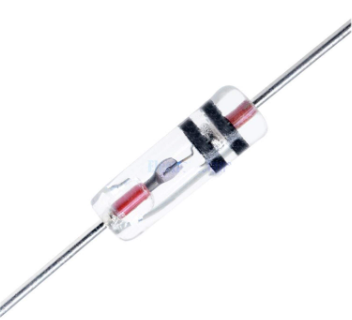
Germanium Diodes
1N34A: A vintage germanium diode commonly used in early audio and radio applications.
OA47: A germanium point-contact diode with low forward voltage suitable for low-power circuits.
Classification Based on Construction:
3.1. PN Junction Diodes:
PN junction diodes are the basic type of diodes and consist of a p-type and an n-type semiconductor material. They are used in rectification, signal demodulation, and switching applications.

PN Junction Diodes
PN Junction Diodes:
1N914: A popular small-signal silicon diode used in general-purpose rectification and signal detection.
1N4007: A high-current silicon diode capable of handling currents up to 1A and voltages up to 1000V.
3.2. Schottky Diodes:
Schottky diodes are formed by a metal-semiconductor junction, which results in a lower forward voltage drop compared to PN junction diodes. They are known for their fast switching characteristics and are used in high-frequency applications, such as power supplies and RF circuits.
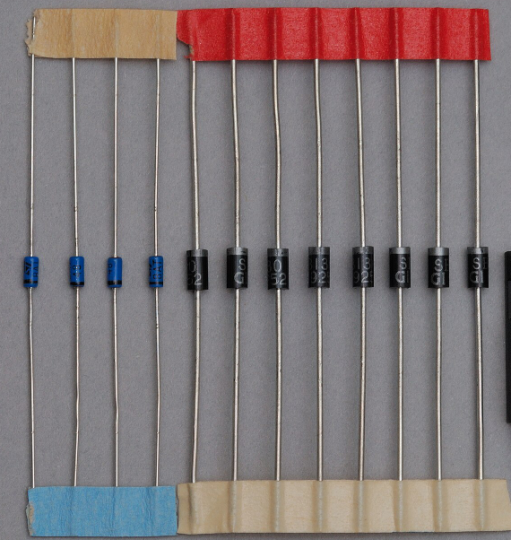
Schottky Diodes
*Example models of Schottky Diodes:
BAT54: A small-signal Schottky diode with low forward voltage drop and fast switching characteristics.
BAT46: A Schottky diode optimized for high-frequency applications with a maximum forward voltage of 0.38V.
3.3. PIN Diodes:
PIN diodes have an intrinsic (I) region sandwiched between the p-type and n-type regions, resulting in an extended depletion region. This unique structure enables them to function as variable resistors when biased. PIN diodes are used in RF switches, attenuators, and photodetectors.

PIN Diodes
*Example models of PIN Diodes:
HSMP-3816: A high-performance PIN diode suitable for RF switching and attenuator applications.
FPD87310: A high-speed, low-distortion PIN diode used in photodetector and RF applications.
Conclusion:
Diodes are versatile electronic components with various classifications based on their function, material, and construction. Rectifier diodes, Zener diodes, and LEDs are examples of diodes classified by their function. Silicon diodes and germanium diodes are categorized based on the materials used, while PN junction diodes, Schottky diodes, and PIN diodes fall under the classification based on construction. Understanding the different types of diodes empowers electronic engineers and enthusiasts to select the most suitable component for specific applications, contributing to the advancement of technology in various fields.
For more relevant models of diodes, please browse these articles:
BAV70 Fast Switching Speed Diode: Datasheet, Equivalent
How Does Diode 1N4148 Work: Datasheet, Circuit
How does 1N4007 Rectifier Diode work: Pinout & Uses


Related Articles

What are Sensors: Types, Application, Working
The Role of Electronics in the Charger: A Comprehensive Guide
How Knock Sensors Work: Price, Diagram, How to Test
CPLD vs FPGA: Architechture, Price and Application
Coaxial Cable vs. Monitor Cable: A Comparison
How Effective is Thermoelectric Cooler
On GaN: Application, Advantages & Disvantages
Electronic Components in Mobile Phones and the Chip Shortage Impact
How Many Chips Does a Car Need
HDMI vs DVI vs DisplayPort vs VGA: Comparing Pros & Cons
On Shunt: Definition, Use and Types of Shunts


