
What Is a Throttle Position Sensor (TPS) And How It Works
Hello, my friends. This post is going to bring you go through the topic about What Is a Throttle Position Sensors (TPS) And How It Works
Catalog
I.What is a Throttle Position Sensors (TPS)
II.Working Principle
III.Types
IV.Symptoms of a Faulty Throttle Position Sensors
V. How to Test a Throttle Position Sensors
VI.What happens when throttle position sensor goes bad?
VII.Tips for Maintaining Throttle Position Sensors
I. What is a Throttle Position Sensor (TPS)?
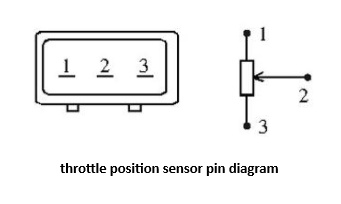
A Throttle Position Sensor (TPS) is a crucial component of the electronic fuel injection (EFI) system in modern vehicles. It monitors the position of the throttle valve, or butterfly valve, which controls the amount of air entering the engine. By providing feedback to the engine control unit (ECU), the TPS ensures the engine receives the appropriate amount of fuel for optimal combustion.
II. How TPS Works?

Working Principle-The TPS operates based on a simple yet effective principle. It consists of a precision potentiometer, which is a resistive track connected to the throttle shaft or throttle plate. As the throttle valve opens or closes, the resistance between the movable contact and the resistive track changes. This change in resistance is then converted into an electrical signal by the TPS, and the signal is transmitted to the ECU.
III. Types of TPS
1. Analog TPS:
- Analog TPSs use a traditional potentiometer setup and provide a continuous range of voltage signals corresponding to different throttle positions. They are simple, reliable, and commonly found in older vehicles.
2. Hall Effect TPS:
- Hall Effect TPSs utilize a magnet and a Hall effect sensor to measure changes in the magnetic field caused by the throttle movement. These sensors are more resistant to wear and tear and can provide more accurate and precise throttle position feedback.
3. Optical TPS:
- Optical TPSs employ an infrared emitter and a phototransistor. As the throttle moves, it interrupts the infrared beam, causing changes in the output signal. Optical TPSs are known for their high reliability and resistance to harsh environments.
4. Digital TPS:
- Digital TPSs generate a digital signal that transmits the throttle position information directly to the ECU. They are highly accurate, durable, and offer excellent noise immunity.
Besides the aforementioned points, it is important to mention the benefits of TPSs, such as improved fuel efficiency, reduced emissions, and increased engine performance. Additionally, discussing the common symptoms of a faulty TPS, like rough idle, poor acceleration, or stalling, would be useful for readers.
Overall, a comprehensive article about Throttle Position Sensors should cover these aspects to provide a solid understanding of their function, working principle, and different types.
IV. Symptoms of a Faulty Throttle Position Sensors:
1. Decreased engine performance: A faulty throttle position sensor (TPS) can cause engine hesitation, rough idling, or a noticeable decrease in acceleration.
2. Inconsistent or surging acceleration: If the TPS is sending incorrect signals, it can cause sporadic surges or inconsistent acceleration when you press down on the throttle.
3. Stalling or difficulty starting: A malfunctioning TPS can disrupt the engine's idle speed control, leading to stalling or difficulty starting the vehicle.
4. Poor fuel efficiency: Incorrect TPS readings can affect the air-to-fuel ratio, resulting in poor fuel efficiency and increased fuel consumption.
5. Check Engine Light: A faulty TPS can trigger the check engine light on the vehicle's dashboard. Be sure to check for error codes related to the TPS using a diagnostic scanner.
V. How to Test a Throttle Position Sensors:
1. Visual inspection: Start by checking the wiring connections and harness of the TPS for any signs of fraying, corrosion, or loose connections.
2. Multimeter test: With the engine off, disconnect the TPS electrical connector. Set a digital multimeter to the appropriate resistance or voltage scale (based on the vehicle's specifications). Place the multimeter probes on the TPS terminals and slowly open and close the throttle. Monitor the multimeter readings to ensure they correspond to the expected values.
3. OBD-II scanner: Alternatively, you can use an OBD-II scanner to retrieve any error codes related to the TPS. This will provide you with more specific information on the TPS performance.
4. Professional assistance: If you're unsure about performing these tests yourself, it's recommended to seek professional help from a mechanic or automotive technician.
VI. What happens when throttle position sensor goes bad?
When a throttle position sensor goes bad, it can cause various issues with the vehicle's engine performance. Here are some common problems:
1. Engine misfires: An unreliable TPS can cause erratic signals to the engine control unit (ECU), leading to misfires or unsteady engine performance.
2. Transmission issues: In some cases, a malfunctioning TPS can affect the shifting patterns of an automatic transmission, causing hesitation or harsh shifting.
3. Unresponsive throttle: A bad TPS can result in unresponsive or delayed throttle response, making it difficult to accelerate smoothly.
4. Reduced power and performance: Faulty TPS readings can lead to decreased engine power and overall performance.
5. Increased fuel consumption: An inaccurate TPS signal can disrupt the air-to-fuel ratio, causing excessive fuel consumption and reduced fuel efficiency.
VII. Tips for Maintaining Throttle Position Sensors:
1. Regular inspection: Periodically check the TPS wiring connections and harness for any signs of damage or corrosion. Clean any connectors if necessary.
2. Keep throttle body clean: A dirty throttle body can affect the TPS performance. Clean the throttle body periodically according to the manufacturer's recommendations.
3. Use high-quality fuel: Poor-quality fuel can leave residue and deposits on the throttle body and TPS. Stick to high-quality fuel to minimize potential issues.
4. Avoid aggressive driving: Excessive and abrupt throttle movements can put unnecessary strain on the TPS. Practice smooth and gradual acceleration.
5. Follow maintenance schedule: Adhere to the vehicle's recommended maintenance schedule, including TPS inspections and replacements at the appropriate intervals.
Examples: TPS systems are found in various car models. Some popular examples include:
a. Ford Mustang: The Mustang often utilizes a potentiometer-based TPS that provides feedback to the ECU for precise fuel and ignition control.
b. Honda Civic: The Civic may employ a non-contact TPS using Hall effect sensors. These sensors provide accurate throttle position data for optimal engine performance.
c. BMW 3 Series: BMW vehicles may feature a TPS with integrated electronics, often referred to as an "electronic throttle body." This system uses non-contact sensors to monitor throttle position and enhance engine responsiveness.
several car models that utilize non-contact TPS systems. Here are a few examples:
Toyota Camry: Many recent models of the Toyota Camry employ a non-contact TPS system. These systems use magnetic field sensors or Hall effect sensors to monitor the throttle position accurately.
Mercedes-Benz C-Class: Certain Mercedes-Benz C-Class models feature a non-contact TPS system. These systems use magnetic field sensing technology to provide precise throttle position feedback to the engine control unit.
Volkswagen Golf GTI: The Volkswagen Golf GTI may incorporate a non-contact TPS system. These systems often use inductive or Hall effect sensors to measure the throttle position.
Audi A4: Some versions of the Audi A4 utilize a non-contact TPS system. These systems employ magnetic field sensors to monitor the position of the throttle valve.
Subaru WRX: Certain Subaru WRX models may feature a non-contact TPS system. These systems use Hall effect sensors or similar technology to provide accurate throttle position data.


Frequently Asked Questions
Related Articles

PMIC Selection and Design Considerations
Digital to Analog Audio Converters Demystification
Microwave Diode Test:Replacement,Cost,Diagram
What Is Fiber Optic Attenuator:Working,Types,How to choose?
Pull-Up & Pull-Down Resistors Difference, Pros & Cons, Selection
Unveiling Metal Oxide Resistors: Mastering Current Control
555 Timer: Applications, Pinout, Pros & Cons
Smoke Detector Installation and Testing|How Many Do You Need?
Solid State Drives Inner Workings And Diverse Varieties
How do Hard Disk Drives Work? Operation, Types Explain
Ultimate Tutorial to JTAG: Understanding the Basics and Operation


