
What are PCBs, How do PCBs Work: Types, Applications
Catalog
Introduction
What is a PCB and PCB Design?
Types of PCB
Structure and Applications of PCBs
What are circuit boards made of?
Histroy and developmemnt of PCB
How do PCBs Work?
PCB Layout Rules and Software
PCB Layout Design challenge
Conclusion

Printed Circuit Boards (PCBs) are an essential component in modern electronics. They provide a platform for interconnecting electronic components, enabling the smooth flow of electrical signals. This article will delve into the world of PCBs, exploring their design, types, structure, applications, and their historical development.
What is a PCB and PCB Design?
A Printed Circuit Board (PCB) is a flat board made of non-conductive material, typically fiberglass, with conductive pathways etched or printed on its surface. These pathways, known as traces, connect various electronic components mounted on the board. PCB design involves planning and creating the layout of these traces, taking into account the specific requirements of the electronic circuit.

pcb layout
Types of PCB:

Single-Sided PCB: It has conductive traces on one side of the board, with components mounted on the other side.
Double-Sided PCB: It has conductive traces on both sides, allowing for a higher density of components.
Multilayer PCB: This type consists of multiple layers of conductive traces separated by insulating layers, enabling complex circuits with a higher component density.
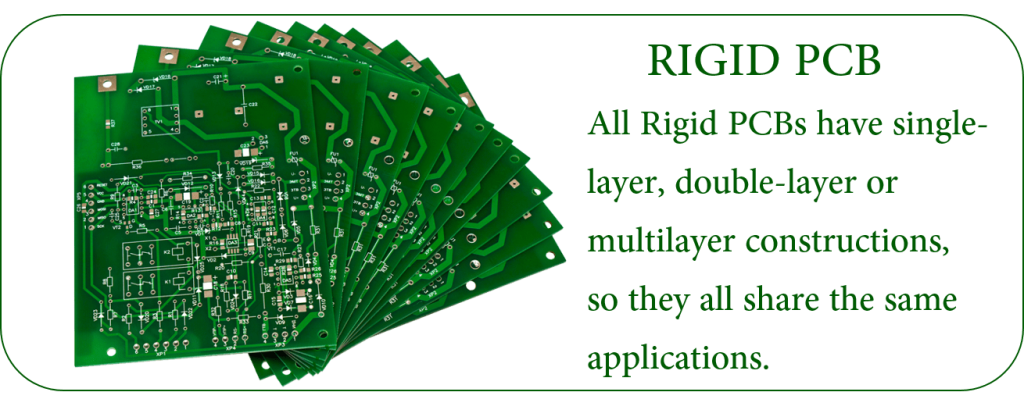
Rigid PCB: These boards are made of rigid materials like fiberglass, commonly used in most electronic devices.

Flexible PCB: Made of flexible materials like polyimide, these boards can bend or twist, suitable for applications that require flexibility.
Rigid-Flex PCB: These boards combine rigid and flexible sections, providing a combination of stability and flexibility.
Structure and Applications of PCBs:
PCBs have a layered structure comprising a substrate, conductive traces, and solder mask. The substrate provides mechanical support, while the conductive traces facilitate the flow of electrical signals. The solder mask protects the traces from environmental factors and prevents short circuits.
What are circuit boards made of?
A printed circuit board (PCB) consists of several key components that work together to provide a functional and reliable platform for electronic circuits. The main components of a PCB include:
Substrate: The substrate, also known as the base material, is the foundation of the PCB. It is typically made of a non-conductive material, such as fiberglass-reinforced epoxy resin (FR-4), which provides mechanical support to the board.
Copper Foil: Copper foil is laminated onto the substrate, forming conductive pathways called traces. These traces carry electrical signals between the various components on the PCB.
Solder Mask: The solder mask is a protective layer applied over the copper traces. It is usually green or another color and helps prevent short circuits and corrosion. The solder mask also provides insulation and protects the traces from environmental factors.
Silkscreen: The silkscreen layer is a printed layer on top of the solder mask. It usually contains component labels, reference designators, symbols, and other markings to assist in assembly, testing, and troubleshooting.
Components: PCBs have various electronic components mounted on them, such as resistors, capacitors, integrated circuits (ICs), connectors, and more. These components are soldered onto the PCB to form the desired electronic circuit.
Pads: Pads are metalized areas on the PCB that provide a connection point for attaching components. They are typically circular or rectangular in shape and are located at specific positions on the PCB to match the component’s leads or terminals.
Through-Holes and Vias: Through-holes are drilled holes that pass through the PCB, connecting the copper traces on different layers. Vias are similar but connect traces on the same layer. These holes are used for component mounting, interconnecting layers, and providing electrical pathways.
Plated Through-Holes: Plated through-holes are through-holes that have been coated with a conductive material, typically copper, to ensure electrical continuity between different layers of the PCB.
Solder: Solder is a metal alloy (usually a combination of tin and lead or other materials) used to create a permanent electrical and mechanical connection between the components and the PCB. Solder is applied to the pads and heated to melt and bond the components to the board.
These components work together to create a functional PCB that provides the necessary electrical connections, mechanical support, and protection for the electronic circuit. The specific arrangement and design of these components depend on the requirements of the circuit and the intended application of the PCB.
PCBs find applications in various industries, including:
Consumer Electronics: PCBs are extensively used in smartphones, computers, televisions, and other consumer electronic devices.
Automotive: PCBs are crucial in automotive electronics, controlling systems such as engine management, entertainment, and navigation.
Aerospace: PCBs are used in avionics systems, ensuring reliable communication, navigation, and control.
Medical Devices: PCBs are found in medical equipment like MRI machines, patient monitors, and pacemakers, enabling accurate diagnostics and treatment.
Industrial Automation: PCBs are used in control systems, robotics, and machinery, ensuring efficient and precise automation processes.
History and Development of PCBs:
The concept of PCBs dates back to the early 20th century when Charles Ducas first patented a method for creating an electrical path on an insulated surface. However, it was during World War II that PCB technology gained significant development and usage. The demand for compact and reliable electronic systems led to advancements in PCB manufacturing techniques.
Over the years, PCB technology has evolved, with improvements in materials, design software, and manufacturing processes. Today, advanced techniques like surface-mount technology (SMT), ball grid array (BGA), and high-density interconnect (HDI) have revolutionized PCB design and assembly, allowing for smaller, more efficient, and complex circuitry.
How do PCBs Work?
- Electrical Connections: The copper traces on the PCB form a network of electrical connections between the components. These traces allow the flow of electrical signals and power between different parts of the circuit.
- Mechanical Support: PCBs provide a solid structure for mounting and supporting electronic components. Components are soldered onto the PCB's pads, which are exposed metal areas on the surface of the board.
- Signal Routing: PCBs have specific traces that route signals between different components, ensuring proper communication and functionality of the circuit.
- Soldering: Solder is used to make electrical connections between the components and the PCB. It also acts as a mechanical adhesive, holding the components firmly in place.
Design and Manufacturing Process
- Design: PCBs are designed using specialized software that allows engineers to create the layout, define the traces, and place the components on the board. Design rules are checked to ensure the integrity and functionality of the PCB [[1]](https://learn.sparkfun.com/tutorials/pcb-basics/all).
- Manufacturing: Once the design is finalized, the PCB is manufactured by etching the copper layers, applying the soldermask and silkscreen layers, and drilling holes for component placement. Advanced manufacturing techniques like pick-and-place machines and reflow soldering are used for efficient and precise assembly [[1]](https://learn.sparkfun.com/tutorials/pcb-basics/all).
Conclusion:
Printed Circuit Boards (PCBs) play a vital role in the functioning of electronic devices across various industries. Their design, structure, and types have evolved significantly, enabling the development of smaller, more efficient, and reliable electronic systems. As technology continues to advance, PCBs will continue to be an integral part of the ever-expanding world of electronics.


Frequently Asked Questions
Related Articles

Transceiver explained:Types, Working, Applications
Various Types of Diodes: A Comprehensive Classification
Single-Phase vs. Two-Phase Liquid Immersion Cooling:Which is Better
How to Add DS1307, DS3231, PCF8563 RTC with Arduino: Tutorial
What Is a Throttle Position Sensor (TPS) And How It Works
Exploring the Power of X Elite
Machine SCADA Expert: Transforming the Development of Electronic Components and Technology
Harnessing Electric Electromobiles to Combat Global Warming and Pollution
Foldable Phone Comparison: Top 4 Folding Phones
Wireless Keyboards: The Evolution of a Technological Marvel
What are PCBs, How do PCBs Work: Types, Applications


