
MCIMX283DVM4B Processors: Datasheet, Pinout, Diagram
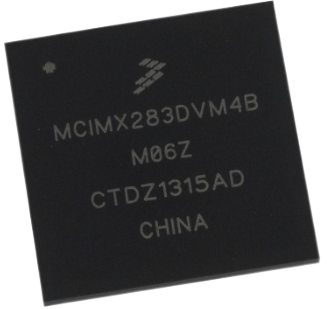
Unveiling the Embedded Processor MCIMX283DVM4B
NXP Semiconductors has long been a key player in the semiconductor industry, known for its innovative embedded processors that power a wide range of devices. Among its impressive lineup is the MCIMX283DVM4B, a versatile and powerful system-on-chip designed to meet the demands of modern embedded applications. In this article, we explore the features and capabilities of the MCIMX283DVM4B Microprocessors and delve into why it stands out in the crowded field of embedded processors.
Overview of the MCIMX283DVM4B
![3W[B3I1Q7_LM]1)K063IAKU](/upload/image/content/20240229/e6d1550ad4117297ad0ff22e96f977be.png "e6d1550ad4117297ad0ff22e96f977be.png")
The MCIMX283DVM4B is part of NXP's i.MX 28 family of processors, which are optimized for low-power and cost-sensitive applications. This particular processor is built on an ARM926EJ-S core running at speeds up to 454 MHz, offering a balance of performance and power efficiency. With integrated peripherals and support for a variety of interfaces, the MCIMX283DVM4B is well-suited for a diverse range of applications, from industrial control systems to consumer electronics.
Key Features
- **ARM926EJ-S Core**: The heart of the MCIMX283DVM4B is the ARM926EJ-S core, a widely used processor design known for its versatility and efficiency. The core is capable of running a variety of operating systems, making it suitable for a broad range of applications.
- **Integrated Peripherals**: The MCIMX283DVM4B features a rich set of integrated peripherals, including USB 2.0, CAN, UART, I2C, SPI, and more. These peripherals simplify system design and reduce the need for additional components, making the processor an attractive choice for cost-sensitive designs.
- **Multimedia Capabilities**: Despite its focus on low-power applications, the MCIMX283DVM4B offers impressive multimedia capabilities, including support for LCD displays and hardware-accelerated video playback. This makes it suitable for applications that require graphical user interfaces or video processing.
- **Low Power Consumption**: One of the key strengths of the MCIMX283DVM4B is its low power consumption, making it ideal for battery-powered devices or other applications where power efficiency is critical. The processor's dynamic power management features help further reduce power consumption without sacrificing performance.
To put it another way, the features could be listed as followed:
MCIMX283DVM4B Features
LCD Controller with Touchscreen
NAND support – SLC/MLC and eMMC 4.4 managed
Hardware BCH (up to 20-bit correction)
200 MHz 16-bit DDR2, LV-DDR2, mDDR external memory support
Dual High-speed USB with embedded PHY
8 General purpose 12-bit ADC channels and a single 2 Msps ADC channel
Temperature sensor for thermal protection
MCIMX283DVM4B Applications
The MCIMX283DVM4B is well-suited for a wide range of embedded applications, including:
- **Industrial Control Systems**: The processor's rich set of peripherals and low power consumption make it ideal for industrial control systems that require reliable and efficient processing.
- **Consumer Electronics**: From smart home devices to portable media players, the MCIMX283DVM4B can power a variety of consumer electronics products that require multimedia capabilities and low power consumption.
- **Automotive Systems**: The processor's support for interfaces like CAN and its robust performance make it a good fit for automotive applications, such as in-vehicle infotainment systems or dashboard displays.
Human-machine interface (HMI) panels: industrial, home
Industrial Drive, PLC, I/O control display, factory robotics display, graphical remote controls
Handheld scanners and printers
Patient-monitoring, portable medical devices
Smart energy meters, energy gateways
Media phones, media gateways
Block Diagram

Package

Conclusion
The MCIMX283DVM4B is a versatile and capable embedded processor that embodies NXP's commitment to innovation and quality. With its combination of performance, power efficiency, and integrated peripherals, the MCIMX283DVM4B is well-equipped to meet the demands of modern embedded applications across various industries. Whether powering industrial control systems, consumer electronics, or automotive systems, this processor offers a compelling solution for developers looking to bring their designs to life with a reliable and efficient processing platform.


Related Articles

IRFZ44N VS IRF3205: Are They Replaceable?
AG13 Vs LR6 Battery : Are they Replaceable?
How Does LM386 Audio Amplifier Work?PDF,Pinout,Circuits
What is C1815 transistor? Datasheet, Pinout, C1815 vs BC547
1N5408 Vs 1N4007 Diode Which Works Better? Specification, PDF
Distinction of STM32G070CBT6 And STM32G070KBT6 Microcontrollers
STM32H747HIX6 vs STM32H723VET6: Compare STM32 Microcontroller
2N7000 Vs 2N7002 Transistor Difference Comparison
Overview For ADS774JU Analog to Digital Converters: How it Works
TMC5160 vs TMC2209 vs TMC2226 Stepper Motor Drivers Comparison
BSS123 vs BSS138: Which is Best?


