
STM32F407VET6 Microcontroller for Embedded Systems: Datasheet, CAD-Model
STM32F407VET6 Basic Introduction:
The STM32F407VET6 is a high-performance microcontroller based on the ARM Cortex-M4 core. It is part of the STM32F4 series, which is known for its advanced features and capabilities. This article aims to provide an overview of the STM32F407VET6 and highlight its key features and applications.
STM32F407VET6 Pinout:

STM32F407VET6 CAD-Model:
Symbol

Footprint

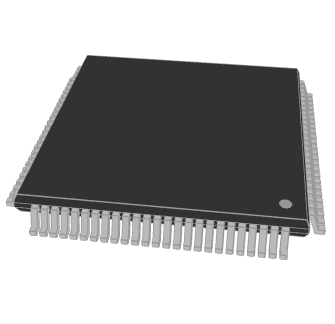
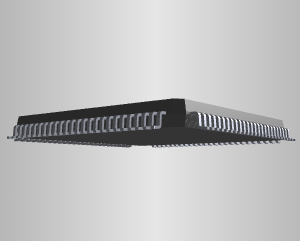
3D-Model
STM32F407VET6 Key Features:
ARM Cortex-M4 Core: The STM32F407VET6 is powered by the ARM Cortex-M4 core, which offers a combination of high performance and low power consumption. This core supports a wide range of digital signal processing (DSP) and floating-point operations, making it suitable for demanding applications.
Clock Speed: The microcontroller operates at a maximum clock speed of 168 MHz, allowing for fast and efficient execution of instructions. This high clock speed enables real-time processing and responsiveness in applications such as industrial control systems, robotics, and motor control.
Memory: The STM32F407VET6 features 512KB of Flash memory for program storage and 192KB of SRAM for data storage. This ample memory capacity allows for the implementation of complex algorithms and the storage of large amounts of data.
Peripherals: The microcontroller offers a wide range of peripherals, including UART, SPI, I2C, USB, CAN, and Ethernet interfaces. These peripherals facilitate communication with external devices and enable the microcontroller to interface with various sensors, actuators, and communication modules.
Advanced Analog Features: The STM32F407VET6 includes a 12-bit analog-to-digital converter (ADC) with up to 24 channels, providing precise and accurate analog signal acquisition. It also features a digital-to-analog converter (DAC) for generating analog output signals.
STM32F407VET6 Applications:
Industrial Automation: The STM32F407VET6 is well-suited for industrial automation applications such as process control, monitoring systems, and data acquisition. Its high-performance capabilities enable real-time control and efficient data processing.
Robotics: With its powerful processing capabilities and extensive peripheral support, the microcontroller is ideal for robotics applications. It can control motors, sensors, and actuators, enabling the development of autonomous robots, drones, and robotic arms.
Internet of Things (IoT): The STM32F407VET6 can be used in IoT applications where connectivity and low power consumption are crucial. Its built-in Ethernet and USB interfaces, along with support for various wireless communication protocols, make it suitable for IoT gateway devices and edge computing.
Audio and Video Processing: The microcontroller’s DSP capabilities and high clock speed make it suitable for audio and video processing applications. It can be used in audio codecs, video streaming devices, and multimedia systems.
STM32F407VET6 Block Diagram
Conclusion:
The STM32F407VET6 is a powerful microcontroller that offers advanced features and capabilities for a wide range of embedded systems applications. Its high-performance ARM Cortex-M4 core, ample memory, and extensive peripheral support make it a popular choice among developers. Whether it’s industrial automation, robotics, IoT, or audio/video processing, the STM32F407VET6 provides the necessary tools to build efficient and reliable embedded systems.


Frequently Asked Questions
Related Articles

HMC349AMS8G RF Amplifier Datasheet, Specification, Pinout, FAQ
STM32F103C8T6,STM32F407VET6,STM32F103RCT6,STM32F405RGT6 Difference
LSM6DS3TR IMU Datasheet, Application,Pinout
What is NLSV4T244MUTAG Translators: Datasheet, Specification
STM32F207ZGT6 Microcontroller Datasheet,Pinout,Specification
ATMEGA2560-16AU vs ATMEGA640-16AU Microcontroller: Difference
MT41K512M16HA-125 IT:A Datasheet, CAD-Model, Specification
MMPF0100F0AEP PMIC Datasheet, Features, Pinout
STM32F103C8T6 Microcontroller Datasheet, Pinout, Schematic
EP3C55F484I7N Vs EP3C40F484C8N FPGA Comparison: Datasheet, Features
ATMEGA128A-AU vs ATMEGA1284P-MU: Differences and Similarity


