DS1302: A Versatile Real-Time Clock (RTC) for Embedded Systems

Introduction


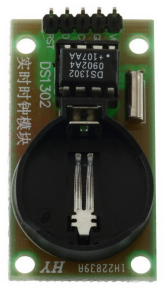
The DS1302 is a highly integrated real-time clock (RTC) chip that provides accurate timekeeping for embedded systems. It features a low power consumption, a wide operating voltage range, and a simple interface. This article explores the features, applications, and interfacing of the DS1302 arduino.
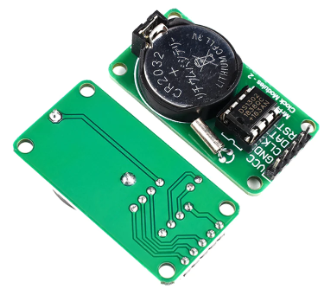
 DS1302 image xinshop7

DS1302 Features

* Real-time clock with seconds, minutes, hours, day, date, month, and year

* Automatic leap year compensation

* Battery backup for continuous operation during power outages

* Low power consumption (less than 500nA in standby mode)

* Wide operating voltage range (2.0V to 5.5V)

* I²C interface for easy communication


DS1302 Applications

The DS1302 is widely used in various applications, including:

* Embedded systems

* Data loggers

* Time-stamped systems

* Security systems

* Medical devices


DS1302 Interfacing

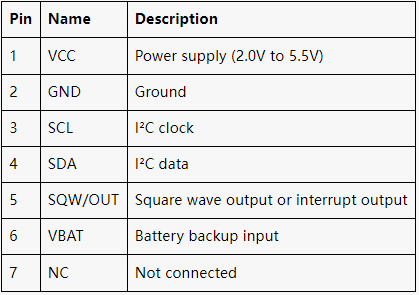
The DS1302 communicates via the I²C bus. It has a 7-bit slave address (0x68). The following table shows the pin configuration:
 

image


DS1302 Timekeeping

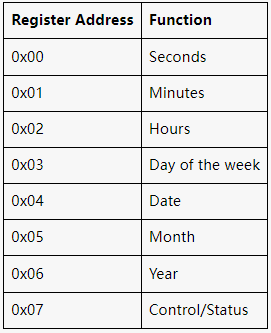
The DS1302 maintains time and date information in eight registers. These registers can be read or written via the I²C interface. The following table shows the register addresses and their corresponding functions:
 

image


DS1302 Battery Backup

DS1302 image xinshop4

The DS1302 has a built-in battery backup circuit that allows it to continue operating even when the main power supply is disconnected. The battery backup voltage is typically provided by a 3V lithium coin cell battery.


ds 1302 datasheet can be found at the end of the article.


STM32+RTC(DS1302)Real-time clock design

Materials:


* STM32 microcontroller board

* DS1302 real-time clock module

* I2C interface (optional)

* Battery (for backup power)


Schematic:


Connect the DS1302 module to the STM32 board via I2C or SPI interface. The specific connections may vary depending on the microcontroller and RTC module used.


Configuration:


1. **Enable I2C/SPI:** Configure the I2C/SPI peripheral on the STM32 microcontroller to communicate with the DS1302 module.

2. **Set RTC time:** Initialize the DS1302 module and set the current time and date using the appropriate I2C/SPI commands.

3. **Enable backup power:** Connect a battery to the DS1302 module to provide backup power in case of power loss.

4. **Configure interrupts (optional):** If desired, configure interrupts on the STM32 microcontroller to receive notifications from the DS1302 module (e.g., alarm triggers).


Code:


The following code snippet shows an example of how to initialize the DS1302 module and set the time:


```c

#include "stm32f1xx_hal.h"

#include "ds1302.h"


// Initialize I2C communication

HAL_I2C_Init(&hi2c);


// Initialize DS1302 module

DS1302_Init();


// Set current time and date

DS1302_SetTime(12, 30, 0);

DS1302_SetDate(2023, 3, 15);

```


Usage:


Once the RTC is configured, you can use it to:


* Keep track of the current time and date

* Set alarms and interrupts

* Calibrate the RTC using an external clock source


Additional Considerations:


* The DS1302 module has a limited battery life. Replace the battery periodically to ensure uninterrupted operation.

* The accuracy of the RTC depends on the crystal oscillator used in the module. Consider using a high-quality crystal for better accuracy.

* If using I2C, ensure that the I2C pull-up resistors are connected properly


Conclusion

The ds1302 rtc is a versatile and reliable real-time clock chip that is ideal for embedded systems and various timekeeping applications. Its low power consumption, wide operating voltage range, and simple I²C interface make it a popular choice for designers. By understanding its features and interfacing, engineers can easily incorporate the DS1302 into their projects to achieve accurate timekeeping and data logging capabilities.


Related Articles

HMC349AMS8G RF Amplifier Datasheet, Specification, Pinout, FAQ

Release time:2023-12-28       Page View:570
RF Switch ICs High Isolation, Nonreflective, GaAs, SPDT Switch,100 MHz to 4 GHzIntroduction:The HMC349AMS8G is a highly versatile RF (Radio Frequency) amplifier that caters to the demanding needs of modern communication systems. Developed by Analog Devices Inc., this integrated circuit (IC) offers exceptional performance...

STM32F103C8T6,STM32F407VET6,STM32F103RCT6,STM32F405RGT6 Difference

Release time:2023-12-22       Page View:455
This post is about A Comparative Analysis of STM32F103C8T6, STM32F407VET6, STM32F103RCT6, and STM32F405RGT6 MicrocontrollersIntroduction:Microcontrollers play a crucial role in modern electronic devices, enabling them to perform a wide range of tasks efficiently. Among the numerous microcontrollers available in the market, ...

LSM6DS3TR IMU Datasheet, Application,Pinout

Release time:2023-12-21       Page View:220
This post is about to Unleashing the Potential of Advanced Motion of Sensing forLSM6DS3TRIntroductionMotion sensing technology has become an integral part of many electronic devices, ranging from smartphones and wearables to drones and virtual reality systems. The LSM6DS3TR is a state-of-the-art inertial measurement unit (IMU) that ...

What is NLSV4T244MUTAG Translators: Datasheet, Specification

Release time:2023-12-20       Page View:460
CatalogNLSV4T244MUTAGOverviewNLSV4T244MUTAGPinoutNLSV4T244MUTAGCAD ModelSymbolFootprint3D-ModelNLSV4T244MUTAG FeaturesNLSV4T244MUTAG ApplicationsNLSV4T244MUTAG AlternativesNLSV4T244MUTAG Typical Application CircuitNLSV4T244MUTAG Functional Block DiagramNLSV...

STM32F207ZGT6 Microcontroller Datasheet,Pinout,Specification

Release time:2023-12-19       Page View:589
An Overview of STM32F207ZGT6: Datasheet, Pinout, and SpecificationsIntroduction:The STM32F207ZGT6 is a powerful microcontroller from STMicroelectronics, equipped with an ARM Cortex-M3 core. It offers a wide range of features and capabilities that make it suitable for a variety of embedded applications.

ATMEGA2560-16AU vs ATMEGA640-16AU Microcontroller: Difference

Release time:2023-12-18       Page View:318
ATMEGA2560-16AUvs ATMEGA640-16AUPinoutATMEGA2560-16AUvs ATMEGA640-16AUCAD-ModelATMEGA2560-16AUvs ATMEGA640-16AUPackageATMEGA2560-16AUvs ATMEGA640-16AUFunctional Block DiagramATMEGA2560-16AUvs ATMEGA640-16AUFeaturesATMEGA2560-16AUvs ATMEGA640-16AUApplica...

MT41K512M16HA-125 IT:A Datasheet, CAD-Model, Specification

Release time:2023-12-16       Page View:408
SDRAM - DDR3L Memory IC 8Gbit Parallel 800 MHz 13.5 ns 96-FBGA (9x14)MT41K512M16HA Description DDR3L (1.35V) SDRAM is a low voltage version of the DDR3 (1.5V) SDRAM. Refer to a DDR3 (1.5V) SDRAM data sheet specifications when running in 1.5V compatible mode.DDR3SDRAMusesadoubledataratearchite...

MMPF0100F0AEP PMIC Datasheet, Features, Pinout

Release time:2023-12-13       Page View:211
MMPF0100F0AEP14 channel configurable power management integrated circuitThePF0100SMARTMOS power management integrated circuit (PMIC) provides a highly programmable/ configurable architecture, with fully integrated power devices and minimal external components. With up to six buck converters, six linear regulators,RTCsupply, and coi...

STM32F103C8T6 Microcontroller Datasheet, Pinout, Schematic

Release time:2023-12-12       Page View:525
The STM32F103C8T6 microcontroller is a popular choice among electronics enthusiasts and professionals due to its powerful features and versatility. In this article, we will explore the datasheet, pinout, and schematic of this microcontroller, providing you with a comprehensive understanding of its functionalities and applications.

EP3C55F484I7N Vs EP3C40F484C8N FPGA Comparison: Datasheet, Features

Release time:2023-12-11       Page View:360
This post is about the Comparative Analysis of EP3C55F484I7N and EP3C40F484C8NIn the high-performance FPGA (Field-Programmable Gate Array) market, Altera's (now acquired by Intel and renamed Intel PSG) EP3C series has been attracting a lot of attention for its high performance and low power consumption. Today, we will compar...

ATMEGA128A-AU vs ATMEGA1284P-MU: Differences and Similarity

Release time:2023-12-08       Page View:239
The ATMEGA128A-AUand ATMEGA1284P-MUare two microcontrollers that share a common heritage but have some distinct differences. In this article, we will explore the similarities and differences between these two devices.ATMEGA128A-AU and ATMEGA1284P-MU are both members of theAVR familyof microcontrollers, designed and ma...

ATMEGA128A-AU 8-bit AVR Microcontroller Datasheet, Specification

Release time:2023-12-07       Page View:211
ATMEGA128A-AU8-bit Microcontrollers - MCU 128K Flash 4K EEPROM 4K SRAM 53 IO PinsIntroductionThe Atmel® ATmega128A is a low-power CMOS 8-bit microcontroller based on the AVR® enhanced RISC architecture. By executing powerful instructions in a single clock cycle, the ATmega128A achieves throughputs close to...
RFQ
BOM